
OEM Guide
What to know before you start a private label project
A read-first guide for brand owners and distributors considering private label aesthetic medical products — covering project readiness, the six-phase process, label compliance requirements, stability testing, and IP structure.
Related
Ready to start a project? The OEM / ODM overview page covers our service scope, packaging customisation options, and how to start a conversation.
Before You Begin
Is a Private Label Project Right for You?
Use this checklist to evaluate whether your business is ready for a private label aesthetic medical project before committing to the process.
-
You have established customer demand for your own brand
Private label makes sense when customers specifically want your brand — not when you simply want to re-sell at a markup. Evaluate whether brand identity or clinical relationship is your competitive advantage.
-
You can commit to repeating orders at viable volume
Private label production runs have fixed overhead costs (artwork, batch documentation, label printing) that only make economic sense over sufficient volume. A one-time order is almost never cost-effective.
-
You have a target market with a regulatory pathway
Before commissioning a private label product, confirm the registration pathway in your primary market. CE, TGA, MFDS, ANVISA — each has different documentation requirements, timelines, and costs.
-
You have legal and regulatory representation in your market
In most markets, the entity whose name appears on the label is the legal manufacturer or authorised representative and carries regulatory responsibility. Ensure your company has the correct legal structure and representation in place.
-
You have budget for the full project lifecycle
Budget beyond product cost: artwork and design, label printing, registration filing fees (can be $2,000-$50,000+ depending on market), stability study contribution if required, and the cost of any required samples for regulatory submission.
Process
The Six Phases Explained
From initial brief to post-delivery support — what happens at each stage and what it produces.
- 01
Requirement Review
1-2 weeksYou provide a product brief: category (HA filler, skin booster, PLLA, etc.), target market, packaging direction, and indicative annual volume. We confirm what is feasible and at what scale.
- Product and market brief
- Feasibility confirmation
- Indicative MOQ and pricing range
- 02
Formula & Specification Selection
1-3 weeksWe map your brief against available formulations and shortlist specifications that match your target indication, price positioning, and regulatory pathway. You receive a technical comparison of options.
- Shortlisted specifications
- Technical comparison
- Regulatory pathway notes per market
- 03
Brand & Packaging Design
3-8 weeksYour artwork (logo, retail box, label, leaflet, blister paper) is adapted to the packaging template. Local labelling requirements are confirmed — language, mandatory fields, warning symbols, HS codes, storage instructions.
- Artwork adaptation
- Label copy review
- Packaging specification sheet
- 04
Sample & Documentation Review
2-4 weeksPre-production samples in your private label packaging are dispatched alongside the technical specification sheet and available documentation package. You evaluate and approve, or submit change requests.
- Physical samples with your branding
- Technical specification sheet
- Documentation status report
- 05
Production & Quality Release
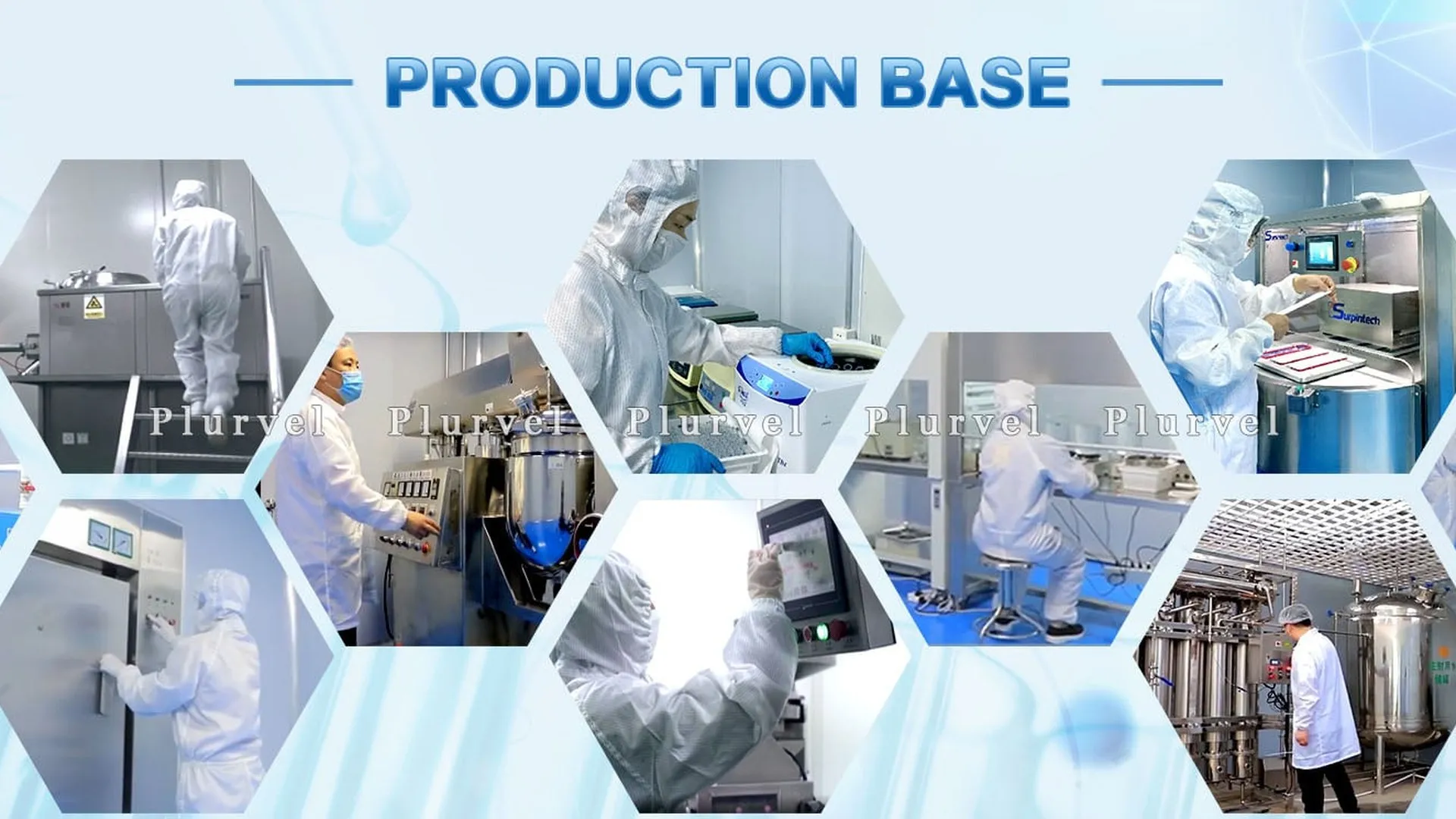
4-10 weeksProduction runs under the ISO 13485 quality management system. Batch documentation, in-process testing, and final QC release records are generated for the specific lot. Shipment is held until quality release is complete.
- Production schedule confirmation
- QC release documentation
- Batch Certificate of Analysis
- 06
Export & Market Support
1-2 weeks post-productionExport documentation package is compiled: commercial invoice, packing list, CoA, ISO certificates, authorisation letter, and air transport classification documents where applicable. Post-delivery support for customs queries.
- Complete export documentation pack
- Air transport classification documents
- Post-delivery support access
Labelling
Mandatory Label Fields
Required information for CE-regulated aesthetic medical device labels. Individual markets may add requirements — verify against your specific regulatory pathway.
| Label Field | Notes |
|---|---|
| Product name | Must match registration file; cannot be changed post-registration without re-filing |
| Manufacturer name and address | Legal name and registered address of the manufacturing facility |
| Authorised representative (EU) | Required for CE-marked products: the EU-based authorised representative |
| CE mark + Notified Body number | For Class IIb/III devices in EU/EEA; must be at least 5mm tall on label |
| Lot/batch number | Traceability requirement under all major regulatory frameworks |
| Manufacturing date and expiry date | Format varies by market; some require "Use by" vs. "Expiry date" wording |
| Storage conditions | e.g. "Store below 25 deg C, protect from freezing and direct light" |
| Active ingredient and concentration | e.g. "Hyaluronic acid 20 mg/mL" |
| Volume / quantity | Net fill volume in mL; number of units per pack |
| Warnings and contraindications | Market-specific; some require specific pictograms (e.g. "Do not re-use" symbol ISO 7000-1051) |
| Language requirements | Most markets require local language. EU allows multi-language labels; some markets require single-language only |
| UDI (Unique Device Identifier) | Mandatory for EU MDR Class IIb/III devices; increasingly required in US, AU, and other markets |
Quality Science
Stability Testing Timeline
Real-Time Stability
Full stated shelf-life (e.g. 24 months)
Products are stored at defined conditions (e.g. 25 deg C / 60% RH) and tested at defined intervals (0, 3, 6, 9, 12, 18, 24 months). Tests include: appearance, pH, HA concentration, sterility, endotoxin, particulate matter, and rheological properties. This is the gold-standard evidence of product stability.
Accelerated Stability
3-6 months (following ICH Q1A)
Products are stored at elevated stress conditions (e.g. 40 deg C / 75% RH) to accelerate degradation reactions. Accelerated data is used to predict real-time stability and support early launch decisions. Regulatory agencies may accept accelerated data for provisional approval while real-time studies continue.
On-going Stability
Continuous during commercial life
Once a product is on the market, ISO 13485 and most regulatory frameworks require on-going stability monitoring — testing retained samples from commercial batches at defined intervals. Data from on-going studies informs shelf-life extension decisions and post-market surveillance reports.
Common Questions
Frequently Asked
- What volume do I need to justify a private label project?
- There is no universal threshold, but as a practical benchmark: private label requires sufficient volume to justify the artwork setup costs, label print run minimums, and the regulatory documentation overhead. For most HA filler products, this typically means committing to a consistent quarterly or annual purchase volume rather than a one-off order. We discuss your target volume in the initial requirement review to determine whether private label or our catalogue product better matches your business stage.
- Can I own the formula exclusively?
- Formulation exclusivity is negotiable and depends on the specific product and your purchase volume commitment. In most cases, the base formulation is a proprietary manufacturer formula that cannot be fully transferred — but we can structure exclusivity around your brand name, labelling, and defined market territory. Exclusivity terms are detailed in a separate addendum to the manufacturing agreement.
- How long does stability testing take?
- Real-time stability testing at defined storage conditions takes the full stated shelf-life duration to complete (e.g. 24 months for a 2-year shelf-life product). Most manufacturers also conduct accelerated stability testing (elevated temperature and humidity conditions) that provides early evidence of stability within 3-6 months, following ICH Q1A guidelines. Products are typically launched with accelerated stability data while real-time studies continue.
- What does an NDA with AestiSource cover?
- Our standard NDA covers: formula composition and specifications shared during the project, production cost data, client brand identity and target market information, and project-specific documentation. The NDA does not restrict AestiSource from supplying similar product categories to other clients under different branding — unless a specific exclusivity agreement is in place.
- Do I need a local regulatory registration before I can sell my private label product?
- In most regulated markets, yes. Changing the label (brand name, local address, artwork) constitutes a new product that must be registered in your market under your company name. AestiSource provides technical documentation to support your registration file. The registration process and timeline are managed by you or your appointed local regulatory agent — requirements vary significantly by country.
Request for quotation
Start an OEM project discussion
Three fields and you're done. We reply with available specifications, packaging options and the documentation status for your country.